Hypnosis, Sound & Movement: Reflections from the 2026 MidAmerica Hypnosis Conference
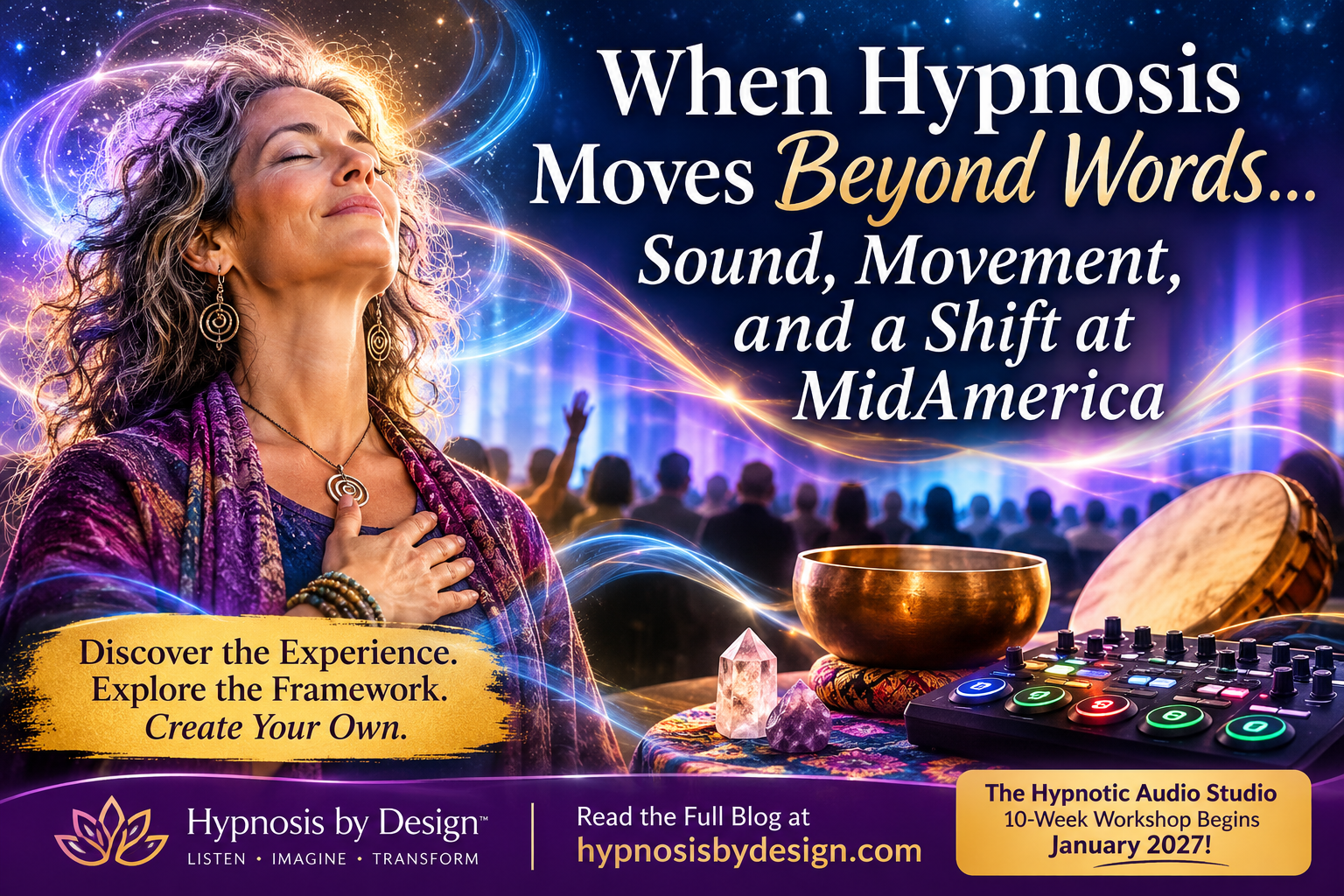
Three days of experiential work, nervous-system education, and live sound reminded me that hypnosis can be explored through more than words alone.
The 2026 MidAmerica Hypnosis Conference gave me the opportunity to share my work across three days - as an experiential facilitator, an educator, and a live sound practitioner. What unfolded was more than three presentations. It became a conversation between what we understand intellectually, what we experience in the body, and how we bring that understanding into our work with others.
The weekend began on Friday, October 16, with The Unbinding Chamber: Somatic Sound and Movement for De-Hypnotizing the Nervous System, from 5:00 to 5:50 p.m. in Arbor B.
I wanted this opening session to be an experience, not simply a lecture about an experience. Hypnotists, NLP practitioners, coaches, and wellness professionals were invited into a space where hypnosis, sound, and movement could meet. Through guided exercises, live and recorded sound, and movement, we explored the relationship between imagination and the body.
The central invitation was to notice what happens when change is not only imagined or described, but explored through direct experience. Rather than asking participants to take my word for it, I wanted them to have an opportunity to notice their own responses and discover what might become available when attention includes the body.
Time to Geek Out
On Saturday, I had the opportunity to move into the details - to geek out, as I like to do, and explain the four-step framework behind my work.
The process begins with Awareness: noticing what is happening rather than moving immediately to change it. Next comes making the subjective objective, using a scale such as a pain scale to give an internal experience a point of reference. The third step is Integration, creating space to work with what has become noticeable. The fourth is Movement - what I call neuro-snacks when it is a short movement experience, or neuro-meals when it becomes a longer, more immersive experience.
One distinction I especially wanted to clarify was the difference between asking a client to visualize and inviting them to use imagination. These words are sometimes treated as interchangeable, but the way we guide someone matters. A person may not form a clear mental picture, and that does not mean imagination is unavailable. The exploration can include what someone notices, senses, feels, or experiences - not only what they can picture.
For me, that distinction matters because the goal is not to ask someone to perform imagination correctly. It is to help them become aware of their own experience. When practitioners have an opportunity to experience a shift for themselves, they have a different reference point as they consider how to guide clients through their own change-work.
Sunday brought the work back into sound. I was first up to create the container, using my BOSS RC-505mkII looper and instruments to build a live sound journey. I began with “7 at 111 because it's heaven” and brought the experience to a close with “Ho'oponopono.”
The looper allowed me to build and layer sound in the moment, shaping the journey as it unfolded rather than relying only on a finished recording. Voice, rhythm, and instruments became part of the environment in which participants could listen and experience. The feedback afterward was amazing. I felt the appreciation, and I also felt the significance of bringing this work into a room of fellow practitioners.
There was another piece of the weekend that helped clarify my intention. Before the experience, I conducted an informal, unofficial survey, asking attendees which of six areas of manifestation felt most present for them: health, money, relationship, career/business, personal development, and giving. Money, health, and relationship were the most frequently selected areas.
I chose to focus on relationship to self.
That choice was intentional. Our relationship with ourselves is part of how we meet every other area of life. When that relationship begins to shift, the effects can ripple outward - in the way we relate to our health, money, other people, our work, our growth, and our capacity to give. This is where I believe the deeper magic happens: not by trying to force change in every area at once, but by beginning with the relationship we have with ourselves.
Looking back, the weekend opened a new chapter in how I want to use hypnosis with sound and movement. I see these elements not as decorations added to a session, but as complementary ways to create an experience. Language can guide. Imagination can open possibilities. Sound can shape the listening environment. Movement can invite participation. And awareness gives the person a way to notice what is happening for them.
The live sound journey and the Saturday framework also reminded me that this work does not have to end when a session ends. A thoughtfully created recording can give clients an audio experience to return to between sessions, while giving practitioners a way to extend the reach of their own voice and approach.
That is the inspiration behind The Hypnotic Audio Studio, a 10-week workshop beginning in January 2027. I’ll guide practitioners through creating professional hypnotic audio - from scripting and sourcing music to voice processing, sound layering, exporting, and publishing. The intention is to make the technical process approachable so you can focus on creating audio that reflects the quality of the work you already do.
The conference reminded me that hypnosis is not limited to what we say. It can also be explored through sound, movement, imagination, and the experience of being present with ourselves.
Ready to take your work beyond the live session?
Learn more about The Hypnotic Audio Studio and the January 2027 workshop at deni-van.com/audio.